
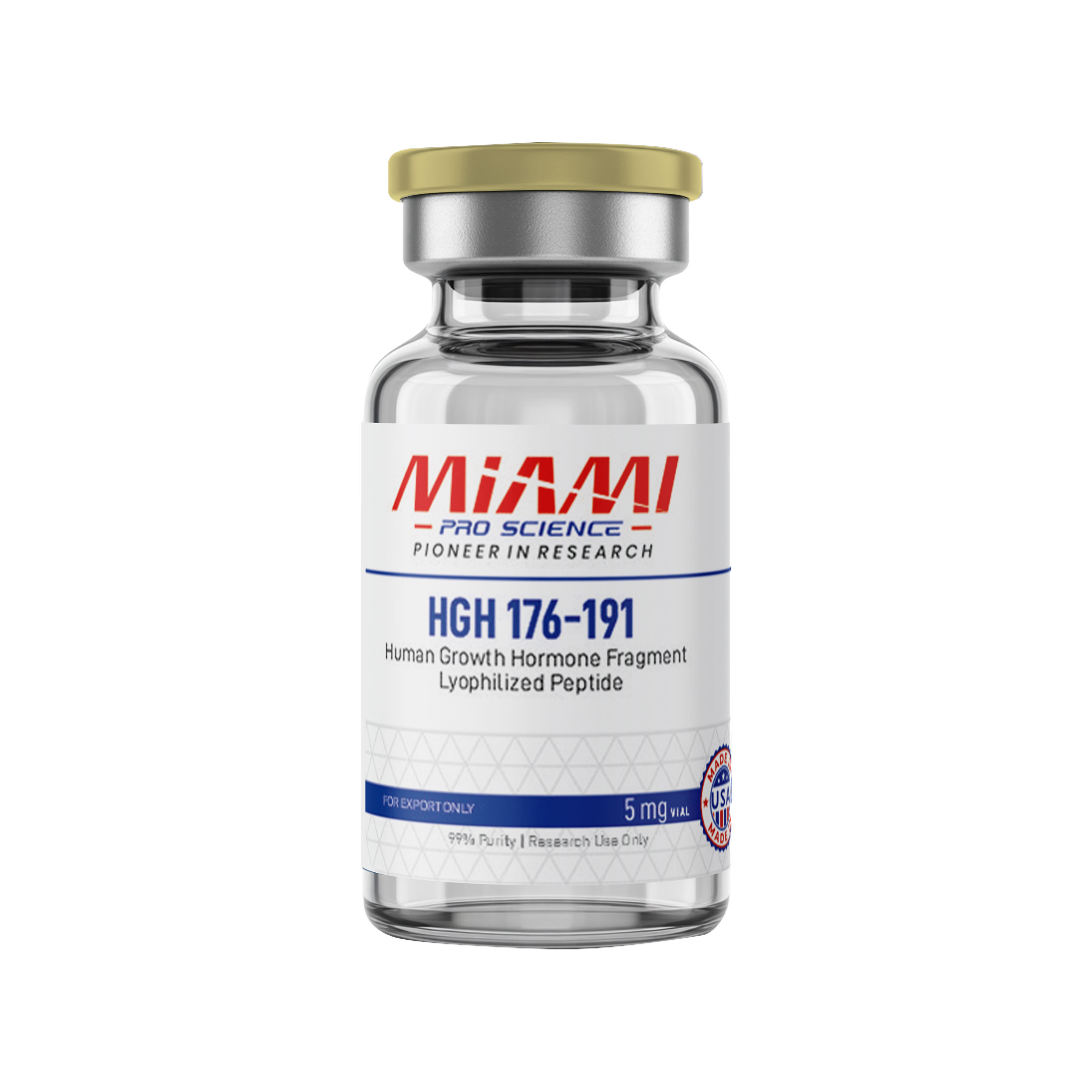
HGH Fragment 176-191 is a modified peptide derived from the fat-burning region of Human Growth Hormone (HGH). It is widely researched for its potential to support lipolysis (fat breakdown), inhibit fat storage, and assist body recomposition without the growth-promoting effects associated with full HGH. Commonly studied for targeted fat-loss and metabolic support protocols.
HGH Fragment 176-191, also known as HGH Frag 176-191, is a synthetic peptide consisting of amino acids 176 through 191 from the C-terminal region of Human Growth Hormone (HGH). Researchers identified this specific sequence as the section primarily responsible for HGH’s fat-metabolizing and lipolytic activity.
Unlike full-length HGH, HGH Fragment 176-191 is designed to focus mainly on fat metabolism pathways while minimizing many of the growth-related or IGF-1 elevating effects commonly associated with traditional growth hormone. This selective mechanism has made it one of the most researched peptides in body recomposition and metabolic-focused protocols.
Research suggests that HGH Fragment 176-191 works by stimulating lipolysis — the breakdown of stored fat into usable energy — while simultaneously helping reduce lipogenesis, the formation of new fat cells. Studies indicate it may activate pathways involving cAMP, hormone-sensitive lipase (HSL), and adipose triglyceride lipase (ATGL), helping mobilize stored fatty acids from adipose tissue.
The peptide has gained popularity in research related to:
One of the major reasons HGH Fragment 176-191 has received attention is because available research suggests minimal impact on blood glucose, insulin sensitivity, and IGF-1 levels compared to traditional HGH.
HGH Frag 176-191 is also commonly associated with the peptide analog AOD-9604, a modified derivative developed specifically for obesity and metabolic research applications.
This product is intended strictly for laboratory and research purposes only. It is not approved for human consumption or medical use.
High-quality research-grade peptides and compounds engineered for scientific innovation and laboratory use.